
team
Better together
TEAM MEMBERS
Board of Directors

Rod Cardoza
Founder, Executive Director
Rod is a cultural, theological and linguistic anthropologist. He has published ethnographic research on Muslim ritual, and lectures internationally on Muslim-Christian dialogue. He studied Urdu language at Delhi University and Jamia Millia Islamia in New Delhi, India. He researched social stratification among Muslim communities in Ahmedabad, India; shamanism among Maguindanaon Muslims in rural Mindanao, Philippines; and Shi’ite mourning rituals in Gujarat, India. He worked closely with leading scholars from Delhi University and Hazrat Pir Mohammed Shah Research Centre in India to publish religious peacebuilding Urdu texts. He also researched the role of Muslim cinematography in teaching Islamic knowledge in Egypt, where Rod lived with his family for several years while studying Arabic. Rod has lectured widely at universities and seminaries such as Lewis & Clark College, American University DC, Fresno Pacific University, and Fuller Theological Seminary. Rod authored “New Paths in Muslim-Christian Dialog: Understanding Islam from the Light of Earliest Jewish Christianity,” (originally presented in Washington, DC at the Annual Conference on Muslim Peace, Justice and Interfaith Dialogue sponsored by Salam Institute for Peace and Justice, and Islamic Society of North America), published in The Muslim World, a journal devoted to the study of Islam and Christian-Muslim relations. Rod lives in San Jose, California and attends a Mennonite church with his wife and three children.

Iris Bendahan
Board Secretary
Iris has been a Jewish educator in the South Bay Area since 2001. She taught supplementary Jewish education at various synagogues, served as Religious School Principal at Congregation Beth David (Saratoga) for eleven years, and continues to train Jewish students for their Bnei Mitzvah. Iris curates The California Holocaust Awareness and Action Interactive Museum (CHAIM), a mobile educational exhibit which is brought to schools, workplaces, and community centers. Prior to working in Jewish education, Iris worked in biotechnology for twenty years after earning a Bachelor degree in Biochemistry from California Polytechnic State University, San Luis Obispo, and a Master’s in Life Sciences from the Weizmann Institute of Science in Israel. Iris has engaged in numerous social action and social justice projects with Congregation Beth David. She discovered AAi in 2014 and resonated deeply with its mission to building interfaith bridges through social action. Since then she led two to three AAi Compassion events annually for Congregation Beth David, coordinated an AAi Trialogue event with Congregation Beth David, West Valley Muslim Association and Saratoga Federated Church, and assisted in organizing Temple Emanu-El San Jose’s first AAi compassion event in November 2018.

Agha Bilal
Board Treasurer
Br. Agha Bilal is the Finance Director at Sunset Cultural Center in Carmel, Calif. He has served several terms as treasurer on the Board of Directors at Islamic Society of Monterey County in Seaside, Calif. He is also a master griller and chef, and loves to cook a feast for large groups, especially for hungry neighbors in need.

Sohail Akhter
Board Member Emertius
Br. Sohail Akhter is the founder of The Cordoba Foundation, a non-profit organization working to promote education about Islam and elderly care for Muslims in the San Francisco Bay Area. He attends South Valley Islamic Center in San Martin, California where he served as president for two terms, leading numerous community service and interfaith events with both Jewish and Christian communities. Sohail has long been an activist for peacebuilding, community outreach and civil rights initiatives, participating regularly in interfaith dialogue and community outreach programs with organizations such as Council on American Islamic Relations (CAIR), Islamic Networks Group (ING) and United Muslims of America Interfaith Alliance. Sohail has a degree in Electrical Engineering from Purdue University and a 20-year professional career in Sales, Marketing and Corporate Development. Sohail is a co-founder of Abrahamic Alliance International, helping take it from concept in 2007 to launch operations in 2008. Sohail served on the AAi Board of Directors from 2008–2014, and remains a distinguished and honorary Board Member Emeritus today.
Advisory Board

Prof. Carol Bakhos
Professor of Jewish Studies
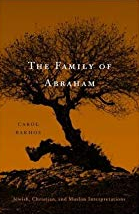
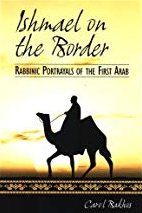
Dr. Carol Bakhos is Professor in the Study of Religion in the Department of Near Eastern Languages and Cultures at UCLA, where she offers courses in Jewish Studies. She teaches on a wide range of topics from the scriptures of Jews, Christians, and Muslims to the history of religions. Since 2012 she has served as Chair of the Study of Religion program and Director of the Center for the Study of Religion at UCLA. Her monograph The Family of Abraham: Jewish, Christian and Muslim Interpretations (Harvard University Press, 2014), was translated into Turkish (2015). Her other monographs and edited works include: Ishmael on the Border: Rabbinic Portrayals of the First Arab (SUNY, 2006), winner of a Koret Foundation Award, Judaism in its Hellenistic Context (Brill, 2004), Current Trends in the Study of Midrash (Brill, 2006), the co-edited work, The Talmud in its Iranian Context (Mohr Siebeck, 2010), and most recently the co-edited volume, Islam and Its Past (Oxford University, 2017). Bakhos’ monumental second volume of the ten-volume Posen Jewish Anthology of Culture and Civilization (Yale University Press) was published in 2025.
Books


Maha Elgenaidi
ING Executive Director
Maha is the Founder and Executive Director of Intercultural Networks Group (ING). With a passion for fostering understanding and cultural competency, she has authored training handbooks on outreach for Muslim Americans and developed training programs for organizations and institutions on cultural literacy and bridging diverse religious and ethnic communities. Maha holds an M.A. in Religious Studies from Stanford University and a B.A. in Political Science and Economics from the American University in Cairo. She has a rich background in education and advocacy, having taught classes and delivered presentations on topics such as Islamophobia, and Islam in the modern world. Maha also taught a video course through LinkedIn Learning on Understanding and Supporting Muslim Colleagues at Work, which is available to view here. Her audiences span universities, corporations, law firms, law enforcement agencies, federal, state, and city governments, healthcare facilities, and community organizations. Recognized for her impactful contributions, Maha has received several prestigious awards, including the “Director’s Community Leadership Award” from the FBI-San Francisco Field Office, “Civil Rights Leadership Award” from the California Association of Human Relations Organizations, the “Citizen of the Year Award” from the Santa Clara County Board of Supervisors, and the “Dorothy Irene Height Community Award” from the NAACP-Silicon Valley. As an advisor, she has lent her expertise to the CA Commission on Police Officers Standards and Training (POST), the County of Santa Clara Hate Crimes Task Force, and Freedom Forum, which contributes to shaping American perspectives on the First Amendment.

Prof. Marianne Farina
Professor of Theology
Sr. Marianne Farina, CSC, Ph.D. is a religious sister of the Congregation of the Sisters of the Holy Cross, Notre Dame. Professor of Philosophy and Theology at Dominican School of Philosophy and Theology (Berkeley, California), Sister Marianne teaches courses that focus on Social Ethics, Virtue, Sexual Ethics, Philosophical Ethics, Islamic Philosophy, Human Rights, Peace-building, and Interreligious Dialogue. She also serves on the Core Doctoral Faculty at the Graduate Theological Union (GTU) and the Center for Islamic Studies, GTU. Sister Marianne received her MA in Pastoral Theology from Santa Clara University and Ph.D. in Theological Ethics from Boston College. She served eleven years in Bangladesh as a teacher, pastoral assistant, and school supervisor, ministering with Muslim, Christian, Hindu, Buddhist and tribal families and communities. With more than thirty years of experience in education and pastoral ministry, Sister Marianne has engaged in a wide variety of projects for social justice and interreligious collaboration. She offers community workshops in Asia, Africa, and North America on teacher trainings for religious education, cross-cultural communication, and methods of interfaith dialogue. Her recent writings include Virtue Theories of Thomas Aquinas and Hamid al-Ghazali; Challenges of Muslim-Christian Dialogue; Faith in Human Rights; Identity and Exclusion: Totalizing Texts in Interreligious Dialogue. Sister Marianne is the author of Sacred Conversations and the Evolution of Dialogue (Paulist Press)..
Books


Rabbi Reuven Firestone
Professor of Judaism and Islam
Rabbi Reuven Firestone is Professor of Medieval Judaism and Islam at Hebrew Union College-Jewish Institute of Religion in Los Angeles, founder and co-director of the Center for Muslim-Jewish Engagement at the University of Southern California, and senior fellow at the USC Center for Religion and Civic Culture. An ordained rabbi (HUC 1982), he received a Ph.D. in Arabic and Islamic Studies from New York University (1988); an M.A. in Hebrew Literature and History from HUC-JIR (1980); and a B.A. in Sociology/Anthropology (Middle East Area Studies) from Antioch College (1974). From 1987–92, he taught Hebrew literature and directed the Hebrew and Arabic language programs at Boston University. He’s taught at Hebrew Union College since 1993. Firestone is the author of Introduction to Islam for Jews (2008); Children of Abraham: An Introduction to Judaism for Muslims (2000); Trialogue: Jews, Christians, Muslims in Dialogue with Leonard Swidler and Khalid Duran (2007); Who Are the Real Chosen People? The Meaning of Chosenness in Judaism, Christianity and Islam (2011); Journeys in Holy Lands: The Evolution of the Abraham-Ishmael Legends in Islamic Exegesis (1990); and Jihad: The Origin of Holy War in Islam (Oxford University Press, 1999). His articles appear in numerous journals, including The Journal of Semitic Studies, The Journal of Near Eastern Studies, The Journal of Religious Ethics, The Journal of the American Academy of Religion, The Journal of Jewish Studies, Jewish Quarterly Review, Judaism, Studia Islamica, The Muslim World, The Journal of Ecumenical Studies, The Encyclopedia of Islam, The Encyclopedia of the Qur’an, and The Encyclopedia of Religion. He has lived in Israel and Egypt, and traveled extensively in the Middle East. Firestone also served on the international “Voice of Peace” radio project and has been involved in a variety of committees and commissions exploring Jewish-Muslim and Jewish-Arab relations. His areas of expertise are Early Islam and its relationship with Jews and Judaism; Scriptural interpretation of the Bible and Qur’an; The phenomenon of holy war; Judaism, Christianity, and Islam; Jihad: its meaning, historical application, and influences on the Arab/Palestinian-Israeli conflict; Inter-religious Polemic.

Prof. James Freeman
Prof. of Cultural Anthropology
Dr. James Freeman is Emeritus Professor of Cultural Anthropology at San Jose State University. He holds a doctorate from Harvard University and is a former Fellow of the Center for Advanced Study in the Behavioral Sciences at Stanford University. Dr. Freeman’s rich academic career has advanced tikkun olam (repairing the world) with award-winning research on untouchability in India, and on Vietnamese refugees and immigrants in California. He is the author of numerous ethnographies including: Scarcity and Opportunity in an Indian Village; Untouchable: An Indian Life History, winner of the 1979 Choice Outstanding Academic Book; Hearts of Sorrow: Vietnamese-American Lives, winner of the 1990 American Book Award, Before Columbus Foundation, and the 1990 Outstanding Book Award, Association for Asian-American Studies; Changing Identities: Vietnamese Americans 1975-1995; and he co-authored Voices from the Camps: Vietnamese Children Seeking Asylum with Nguyen Dinh Huu. Dr. Freeman is also Co-founder and former Board Chair of both Friends of Hue Foundation and Aid to Children without Parents, charitable organizations providing assistance to children and families suffering from poverty in Vietnam.

Prof. Adam Gregerman
Professor of Jewish-Catholic Relations
Prof. Adam Gregerman is Assistant Professor of Jewish Studies and Assistant Director of the Institute for Jewish-Catholic Relations at Saint Joseph’s University in Philadelphia, PA. He is a graduate of Amherst College (B.A.), Harvard Divinity School (M.T.S.), and Columbia University (Ph.D. in Religion), and has studied and taught at both Jewish and Christian seminaries. He researches the complex relationship between Judaism and Christianity from antiquity to the present, with a focus on biblical interpretation, religious polemics, and theodicy. His book Building on the Ruins of the Temple: Apologetics and Polemics in Early Christianity and Rabbinic Judaism was published by Mohr Siebeck in 2016. He is especially interested in contemporary Christian theologies of the land and state of Israel and has written a series of articles on this topic (published in Kirche und Israel, Israel Affairs, Modern Theology, Cross Currents, and Journal of Ecumenical Studies). He has been a Coolidge Scholar at the Association for Religion and Intellectual Life and a Fellow at the American Academy of Religion/Luce Foundation Seminars on Theologies of Religious Pluralism. Adam is involved in a variety of Jewish-Christian dialogue projects. An advisor to national Jewish organizations, he serves as academic consultant to the National Council of Synagogues and as Jewish Studies consultant to the Christian Scholars Group on Christian-Jewish Relations. He is also a member of the Committee on Ethics, Religion, and the Holocaust at the U.S. Holocaust Memorial Museum.

Prof. Aaron Hahn Tapper
Professor of Jewish Studies
Dr. Aaron Hahn Tapper is the Mae and Benjamin Swig Associate Professor in Jewish Studies, and the founding Director of the University of San Francisco Swig Program in Jewish Studies and Social Justice, the first academic program in the country formally linking these two fields. Prior to this appointment he served on the faculty of the Religious Studies Department at California State University, Northridge. Aaron also served as the Founder and Co-Executive Director of Abraham’s Vision, a conflict transformation organization that explored group and individual identities through experiential and political educational programs that focus on the Jewish, Muslim, Israeli, and Palestinian communities. Aaron previously lived in the Middle East for five years—four years in Jerusalem and one year in Cairo—and has traveled extensively in Jordan, Morocco, Lebanon, and Syria. Aaron received a BA in Psychology from the Johns Hopkins University, a Master’s degree from Harvard Divinity School, focusing on World Religions, and a PhD in Comparative Religions from the University of California, Santa Barbara. His doctoral dissertation, “From Gaza to the Golan: Religious Nonviolence, Power, and the Politics of Interpretation,” explores the relationship between the socio-political context of Israel and Palestine, religious law, and power. His interdisciplinary research interests are comparative religions, the history of religions, the interplay between politics and religion, Judaism, Islam, nonviolence, and the relationship between power and religious authority. Aaron is also a Co-Executive Director and Co-Founder of Center for Transformative Education, and co-editor of Muslims and Jews in America: Commonalities, Contentions, and Complexities with Reza Aslan.

Prof. Susannah Heschel
Professor of Jewish Studies
Dr. Susannah Heschel is the Eli Black Professor of Jewish Studies at Dartmouth College. Her scholarship focuses on Jewish-Christian relations in Germany during the 19th and 20th centuries, the history of biblical scholarship, and the history of anti-Semitism. Her numerous publications include Abraham Geiger and the Jewish Jesus (University of Chicago Press), which won a National Jewish Book Award, and The Aryan Jesus: Christian Theologians and the Bible in Nazi Germany (Princeton University Press). She has also taught at Southern Methodist University and Case Western Reserve University. Heschel has been a visiting professor at the Universities of Frankfurt and Cape Town as well as Princeton, and she is the recipient of numerous grants, including from the Ford Foundation, Carnegie Foundation, and a yearlong Rockefeller fellowship at the National Humanities Center. In 2011-12 she held a fellowship at the Wissenschaftskolleg in Berlin. She has received four honorary doctorates from universities in the United States, Canada, and Germany. Currently she is a Guggenheim Fellow and is writing a book on the history of European Jewish scholarship on Islam. In 2015 she was elected a member of the American Society for the Study of Religion. The author of over one hundred articles, she has also edited several books, including Moral Grandeur and Spiritual Audacity: Essays of Abraham Joshua Heschel; Betrayal: German Churches and the Holocaust (with Robert P. Ericksen) Insider/Outsider: American Jews and Multiculturalism (with David Biale and Michael Galchinsky). She serves on the academic advisory council of the Center for Jewish Studies in Berlin and on the Board of Trustees of Trinity College.

Prof. Amir Hussain
Professor of Theology
Dr. Amir Hussain is Professor of Theological Studies at Loyola Marymount University, the Jesuit university in Los Angeles. He specializes in the study of contemporary Muslim societies in North America, and comparative theology. He is deeply committed to his students, and holds the distinction of being the only male to serve as Dean of Women at University College, University of Toronto. In both 2008 and 2009, Amir was chosen by vote of LMU students as Professor of the Year. Amir is active in academic groups such as the Canadian Society for the Study of Religion and the American Academy of Religion, where he is co-chair of the Contemporary Islam group, and serves on the steering committee of the Religion in South Asia section. He is on the editorial boards of three scholarly journals: Contemporary Islam: Dynamics of Muslim Life; Comparative Islamic Studies; and the Journal of Religion, Conflict, and Peace. In 2008, he was appointed as a fellow of the Los Angeles Institute for the Humanities. Amir’s latest book, Oil and Water: Two Faiths, One God, is an introduction to Islam for North Americans. Amir has been involved in interfaith work across North America for almost three decades, working primarily with Muslim, Jewish and Christian communities. He is a signatory of the award-winning and historic letter of peace from global Muslim leaders to Christian leaders everywhere in October 2007, A Common Word Among Us and You. As a Muslim from a working class background, Amir is particularly interested in issues of social and economic justice.

Rabbi Sheldon Lewis
Rabbi, Author, Peacemaker
Rabbi Sheldon Lewis studied at the University of Chicago and at the Jewish Theological Seminary in New York City, where he received rabbinic ordination. He was a student of Prof. Abraham Joshua Heschel and was an active participant with him in the civil rights movement. Rabbi Lewis served as a chaplain in the U.S. Army, including a year in Vietnam where the experiences of war were seared into his consciousness. He has been active in human rights causes and in peacemaking internationally. He was especially engaged in the struggle for the liberation of Russian Jews. Along with an abiding interest in reconciliation efforts in the Middle East, he has been deeply involved in interfaith work to promote mutual respect and advance the common good. He is Rabbi Emeritus of Congregation Kol Emeth in Palo Alto, California, which he served for thirty-three years. As former president of the Northern California Board of Rabbis, Rabbi Lewis has been committed to nurturing bonds of unity among various streams of Jewish expression. After 9/11, as a personal response, Rabbi Lewis began a search for peacemaking wisdom in Jewish sacred texts, an effort which culminated in the publication of his book, Torah of Reconciliation. Following the annual cycle of Torah readings, Torah of Reconciliation reveals a wealth of resources available in Judaism for the crucial task of peacemaking in the modern world by expanding thematic verses and passages through the lens of rabbinic commentary.

Dr. Brian McLaren
Pastor, Theologian, Activist
Dr. Brian McLaren is an author, speaker, pastor, and public theologian among innovative Christian leaders, thinkers, and activists. Brian is a frequent guest on television, radio, and news media programs, such as Larry King Live, Religion and Ethics Newsweekly, and Nightline. His work has also been covered in TIME Magazine (where he was listed as one of America’s 25 most influential evangelicals), Christianity Today, Christian Century, The Washington Post, and many other print media. He is the author of A New Kind of Christian; More Ready Than You Realize; The Church of the Other Side; Adventures in Missing the Point (with Tony Campolo); and Finding Faith.His book A Generous Orthodoxy has been called a manifesto of the emerging church conversation. He dedicated The Secret Message of Jesus “to all who work for peace among nations, races, classes, religions, and individuals, because these people are part of something bigger and more important than we fully understand.” His more recent books Everything Must Change and A New Kind of Christianity issue a call for radical hope amidst profound global dilemmas with communities based on justice, peace, equality and compassion. Brian is actively involved in Emergent Village, which aims to “join in the activity of God in the world… as God’s dreams for our world come true.” He is a former Board chair for Sojourners, an organization committed to articulating the biblical call to social justice, inspiring hope and building a movement to transform individuals, communities, the church, and the world. He is a founding member of Red Letter Christians, and has also served on the boards of Mars Hill Graduate School, and Off The Map.

Dr. Ejaz Naqvi
Doctor, Author, Community Leader
Dr. Ejaz Naqvi studied medicine at University of Karachi, Pakistan, then completed his internship and residency at University of Southern California. Dr. Naqvi is the director of Graduate Medical Education for the Diablo Service Area of Kaiser-Permanente, and sub-chief of the Chronic Pain Program. He oversees the education of medical residents in the departments of surgery, obstetrics and gynecology, podiatry, and internal medicine; and serves as an associate clinical professor at the University of California, San Francisco. Dr. Naqvi is the former president of the Islamic Center of Zahra in Pleasanton, California. He presently serves on the executive board of the Interfaith Council of Contra Costa County, and on the Board of Directors of Islamic Scholarship Fund, a non-profit organization providing academic scholarships to Muslim students in the United States. Dr. Naqvi describes himself as a “born-again Muslim.” After reading a translation of the Qur’an as an adult and pondering its verses, he discovered that much of its teaching remains arcane. Subsequent study of the Qur’an and Bible revealed tremendous common ground, which he shares in his book, The Quran: With or Against the Bible? (2012). Dr. Naqvi is the host of radio talk show, “Frank Talk with Dr. Ejaz : The Forum for Civil Dialogue on Religion and Wellness”, on Toginet Radio.

Prof. Abdullah Saeed
Professor of Islamic Studies
Dr. Abdullah Saeed is the Sultan of Oman Professor of Arab and Islamic Studies at the University of Melbourne, the Director of the National Centre for Contemporary Islamic Studies, and the Convenor of Islamic Studies at the University of Melbourne. Prof. Saeed graduated from the Islamic University of Medina in 1986 with a Bachelor of Arts in Arabic and Islamic Studies. He holds an MA in Applied Linguistics as well as a PhD in Islamic Studies from the University of Melbourne. He is an active researcher, focusing on one of the most important issues in Islamic thought today: the negotiation of text and context, ijtihad and interpretation. He is frequently asked to present both nationally and internationally. He is particularly interested in the promotion of inter-religious initiatives. He regularly engages with Muslim, Christian, and Jewish communities at national and international symposia to enhance community understandings of Islam, Islamic thought, and Muslim societies. He has authored and edited numerous works, including Human Rights and Islam: An Introduction to Key Debates between Islamic Law and International Human Rights Law (Edward Elgar, 2018); Reading the Qur’an in the Twentieth Century: Towards a Contextualist Approach (Routledge, 2014); Islam and Human Rights (edited, Edward Elgar, 2012), Islamic Political Thought and Governance (edited, Routledge, 2010); The Qur’an: An Introduction (Routledge 2008); Islamic Thought: An Introduction (Routledge, 2006); Interpreting the Qur’an: Towards a Contemporary Approach (Routledge, 2006); and Approaches to the Qur’an in Contemporary Indonesia (Oxford University Press, 2005). In addition to his strong research focus, Professor Saeed continues to teach Islamic studies at undergraduate and postgraduate levels and supervise postgraduate students. Professor Saeed is the Foundation Chair of the Sultan of Oman Endowed Chair in Arab and Islamic Studies at the University of Melbourne.

Prof. Marvin Wilson
Professor of Theological Studies
Dr. Marvin Wilson is Professor of Biblical and Theological Studies at Gordon College. He served as a translator and editor of the NIV (New International Version) Bible, currently the most widely used English Bible translation in the world. Dr. Wilson has taught Biblical Hebrew and Jewish Studies for more than 60 years and co-edited four books with Jewish scholars to build bridges of understanding between Christian and Jewish communities. Dr. Wilson is the author of the celebrated book, Our Father Abraham: Jewish Roots of the Christian Faith (1989), singled out by Christian Century Magazine as an “all-time best seller” in the field of religion, and selected to form the basis of an award-winning PBS documentary, Jews and Christians: A Journey of Faith. More recently, Dr. Wilson authored, Exploring Our Hebraic Heritage: A Christian Theology of Roots and Renewal (2014), about which the Jewish intellectual Prof. Susannah Heschel (daughter of Rabbi Abraham Joshua Heschel, the legendary Jewish theologian) wrote, “For two thousand years, we have longed for a Christian scholar of Judaism as sensitive and knowledgeable as Marvin Wilson, and his work fulfills our hopes. Insightful and deeply learned, this book is a remarkable example of a Christian theology that affirms Judaism with respect and appreciation.”

Prof. Mahmoud Ayoub
Professor of Muslim Studies
Dr. Mahmoud Ayoub رحمه الله (1935–2021) was Professor of Islamic Studies and Christian-Muslim Relations at Hartford Seminary in Connecticut and AAi Advisor for many years. He earned his Ph.D. in the History of Religion from Harvard University, an M.A. in Religious Thought from University of Pennsylvania, and a B.A. in Philosophy from American University of Beirut. From 1988 to 2008, he was Professor and Director of Islamic Studies at Temple University, Philadelphia, Adjunct Professor at Hartford Seminary, Research Fellow at the Middle East Center, University of Pennsylvania, and the Tolson Visiting Professor at the Pacific School of Religion, Berkeley. In 1998, Dr. Ayoub helped plan and launch a graduate M.A.-level program in Muslim-Christian relations and comparative religion for the Centre for Christian-Muslim Studies, University of Balamand, Lebanon, and has been its visiting professor since 1999. Mahmoud Ayoub also taught at San Diego State University, the University of Toronto, and McGill University. Throughout his academic career, Dr. Mahmoud Ayoub has received distinguished awards and scholarships, both for his achievements and research. He was a recipient of the Kent Doctoral Fellowship and the Canada Council Fellowship. In 1994-5, he participated in the Fulbright Exchange of Scholars program for Malaysia. In 2000, he undertook a research project on Christian-Muslim relations in Egypt and Lebanon, also on a Fulbright scholarship. Mahmoud Ayoub has authored numerous books including, A Muslim View of Christianity (2007); Islam: Faith and History (2004); The Qur’an and Its Interpreters, vol. 1 (1984) & vol. 2 (1992), The Crisis of Muslim History (2003), and Redemptive Suffering in Islam (1978). He has published similar work in Arabic, e.g., Dirasat fi al-‘Alaqat al-Masihiyyah al-Islamiyyah (Studies in Christian-Muslim Relations). Additionally, his articles have appeared in books and journals such as The Muslim World, Journal of the American Oriental Society, Bulletin of the Institute of Middle Eastern Studies (Tokyo) and Islamochristiana (Rome), among many others. Mahmoud Ayoub’s authority in both the scholarship and comparative study of Islam and Muslim-Christian relations, as well as inter-religious dialogue, is evidenced by the international recognition he has received.
AAi University
Faculty
Rod Cardoza
AAi Founder, Executive Director
Rod Cardoza is the founder of AAi University, an educational program of Abrahamic Alliance where each of our three communities can not only learn about the common ground we share, but also how to navigate the thorny complexities of our differences from bridge-building scholars qualified to teach their own sacred texts to their own community. Rod teaches AAi’s Loving Muslim Neighbors seminar at churches, drawing on his international experience as a cultural, theological, and linguistic anthropologist among Muslims. He’s published ethnographic research on Muslim ritual, and lectures widely on Muslim-Christian dialogue. He studied Urdu language at Delhi University and Jamia Millia Islamia in New Delhi, India. He researched social stratification among Muslim communities in Ahmedabad, India; shamanism among Maguindanaon Muslims in rural Mindanao, Philippines; and Shi’ite mourning rituals in Gujarat, India. He worked closely with leading scholars from Delhi University and Hazrat Pir Mohammed Shah Research Centre in India to publish peacebuilding religious texts in Urdu. He also researched the role of Muslim cinematography in teaching Islamic knowledge in Egypt, where Rod lived with his family for several years while studying Arabic. Rod authored “New Paths in Muslim-Christian Dialog: Understanding Islam from the Light of Earliest Jewish Christianity,” (originally presented in Washington, DC at the Annual Conference on Muslim Peace, Justice and Interfaith Dialogue sponsored by Salam Institute for Peace and Justice, and Islamic Society of North America), published in The Muslim World, a journal devoted to the study of Islam and Christian-Muslim relations.
Rabbi Reuven Firestone
Professor of Judaism and Islam
Rabbi Reuven Firestone teaches our Understanding Muslim Neighbors course at synagogues with AAiU. He is uniquely qualified as Professor of Medieval Judaism and Islam at Hebrew Union College-Jewish Institute of Religion in Los Angeles, founder and co-director of the Center for Muslim-Jewish Engagement at the University of Southern California, and senior fellow at the USC Center for Religion and Civic Culture. An ordained rabbi (HUC 1982), he received a Ph.D. in Arabic and Islamic Studies from New York University (1988); an M.A. in Hebrew Literature and History from HUC-JIR (1980); and a B.A. in Sociology/Anthropology (Middle East Area Studies) from Antioch College (1974). From 1987–92, he taught Hebrew literature and directed the Hebrew and Arabic language programs at Boston University. He’s taught at Hebrew Union College since 1993. Firestone is the author of Introduction to Islam for Jews (2008); Children of Abraham: An Introduction to Judaism for Muslims (2000); Trialogue: Jews, Christians, Muslims in Dialogue with Leonard Swidler and Khalid Duran (2007); Who Are the Real Chosen People? The Meaning of Chosenness in Judaism, Christianity and Islam (2011); Journeys in Holy Lands: The Evolution of the Abraham-Ishmael Legends in Islamic Exegesis (1990); and Jihad: The Origin of Holy War in Islam (Oxford University Press, 1999). His articles appear in numerous journals, including The Journal of Semitic Studies, The Journal of Near Eastern Studies, The Journal of Religious Ethics, The Journal of the American Academy of Religion, The Journal of Jewish Studies, Jewish Quarterly Review, Judaism, Studia Islamica, The Muslim World, The Journal of Ecumenical Studies, The Encyclopedia of Islam, The Encyclopedia of the Qur’an, and The Encyclopedia of Religion. He has lived in Israel and Egypt, and traveled extensively in the Middle East. Firestone also served on the international “Voice of Peace” radio project and has been involved in a variety of committees and commissions exploring Jewish-Muslim and Jewish-Arab relations. His areas of expertise are Early Islam and its relationship with Jews and Judaism; Scriptural interpretation of the Bible and Qur’an; The phenomenon of holy war; Judaism, Christianity, and Islam; Jihad: its meaning, historical application, and influences on the Arab/Palestinian-Israeli conflict; Inter-religious Polemic.
Dr. Amir Hussain
Professor of Theology
Prof. Amir Hussain teaches our course on Understanding Jewish Neighbors at Muslim community centers. He is uniquely qualified as Professor of Theological Studies at Loyola Marymount University, the Jesuit university in Los Angeles. He specializes in the study of contemporary Muslim societies in North America, and comparative theology. He is deeply committed to his students, and holds the distinction of being the only male to serve as Dean of Women at University College, University of Toronto. In both 2008 and 2009, Amir was chosen by vote of LMU students as Professor of the Year. Amir is active in academic groups such as the Canadian Society for the Study of Religion and the American Academy of Religion, where he is co-chair of the Contemporary Islam group, and serves on the steering committee of the Religion in South Asia section. He is on the editorial boards of three scholarly journals: Contemporary Islam: Dynamics of Muslim Life; Comparative Islamic Studies; and the Journal of Religion, Conflict, and Peace. In 2008, he was appointed as a fellow of the Los Angeles Institute for the Humanities. Amir’s latest book, Oil and Water: Two Faiths, One God, is an introduction to Islam for North Americans. Amir has been involved in interfaith work across North America for almost three decades, working primarily with Muslim, Jewish and Christian communities. He is a signatory of the award-winning and historic letter of peace from global Muslim leaders to Christian leaders everywhere in October 2007, A Common Word Among Us and You. As a Muslim from a working class background, Amir is particularly interested in issues of social and economic justice.
Prof. Marvin Wilson
Professor of Theological Studies
Dr. Marvin Wilson teaches our course on Loving Jewish Neighbors at churches. He is uniquely qualified as Professor of Biblical and Theological Studies at Gordon College. He served as a translator and editor of the NIV (New International Version) Bible, currently the most widely used English Bible translation in the world. Dr. Wilson has taught Biblical Hebrew and Jewish Studies for more than 60 years and co-edited four books with Jewish scholars to build bridges of understanding between Christian and Jewish communities. Dr. Wilson is the author of the celebrated book, Our Father Abraham: Jewish Roots of the Christian Faith (1989), singled out by Christian Century Magazine as an “all-time best seller” in the field of religion, and selected to form the basis of an award-winning PBS documentary, Jews and Christians: A Journey of Faith. More recently, Dr. Wilson authored, Exploring Our Hebraic Heritage: A Christian Theology of Roots and Renewal (2014), about which the Jewish intellectual Prof. Susannah Heschel (daughter of Rabbi Abraham Joshua Heschel, the legendary Jewish theologian) wrote, “For two thousand years, we have longed for a Christian scholar of Judaism as sensitive and knowledgeable as Marvin Wilson, and his work fulfills our hopes. Insightful and deeply learned, this book is a remarkable example of a Christian theology that affirms Judaism with respect and appreciation.”
BETTER TOGETHER
Join our Team
Our amazing team of donors make it all possible with their generosity.